
 ▶
 ▶
 ▶
Built on purpose. Guided by values.
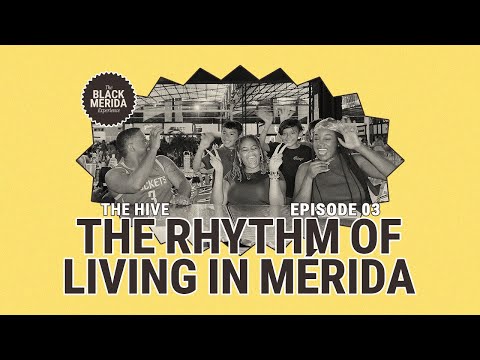
Eric and Nicole Hatch came to Mexico with suspicions. What started as a week-long vacation turned into a sabbatical, then a scouting trip, all at once.
They came to test what they'd heard.
They were testing what they'd heard against what was actually true.
The stories about Mexico, the assumptions about healthcare, food quality, safety, the people themselves. None of it held up. What they found instead was a culture that prioritizes family, community, and human dignity in ways that allowed them to breathe differently. To parent differently. To imagine what Black life could look like when the constant weight we carried finally lifts.
But they also saw something else: the need for intentional structure. Without it, even the best intentions can replicate the same patterns people are trying to escape. Toxicity travels. Exploitation finds new markets. Mission drift turns communities into something unrecognizable.
Where the vision comes from, and the history behind it, is in our Manifesto.
And why it's designed this way.
TBME is an open-access, values-based community. That means anyone can join, but participation and belonging are protected by clearly defined behavioral standards rooted in shared values.
We don't require religious belief, faith participation, or ideological agreement as conditions of membership. We build community through shared values and behavioral accountability. We require respect, integrity, accountability, and genuine care for the community.
Because some of the most committed participants in this community are interracial families. Biracial kids. White spouses of Black members. People who show up, give consistently, and contribute meaningfully to what's being built here. A belief-based or identity-based gatekeeping model would exclude people who are actually doing the work. A values-based model rewards the work itself.
This design also ensures transparency. What you see is what you get. No hidden agendas. No coercion. No manipulation. TBME operates with full clarity about what we are and what we expect.
Building a Black-centered community in someone else's country.
It requires more than good intentions. It requires constant vigilance, cultural humility, and a willingness to confront uncomfortable truths about what we're bringing with us.
We have interracial couples. Biracial children. Single parents from prior interracial relationships. Black diaspora members married to non-Black spouses. Families that don't fit neat categories but are deeply invested in what we're building.
Some of these families contribute more, show up more consistently, and give more generously than some of our Black American members. That's not a problem to solve, it's a reality to honor. TBME centers Black Americans, but it doesn't exclude people who are genuinely connected to and invested in our collective wellbeing.
What we protect against isn't people. It's behavior.
Exploitation
Systems that take from the community and from the culture that welcomes us.
Performative allyship
Presence without contribution. Words without the work.
Taking without giving
Behavior that harms the community we're trying to build.
We're getting in front of it now.
We're watching a silent exodus already underway. Black Americans are landing in Panama, Colombia, Thailand, Ghana, Kenya and Mexico, and we believe the numbers will keep growing in the coming years.
Mexico, as a neighboring country, will absorb much of that overflow: Americans relocating permanently or temporarily, looking for safety, affordability, stability. Many will arrive carrying the same pace and patterns they hoped to leave.
We're getting in front of that now.
TBME exists to model what intentional relocation looks like. To show that you can build community without importing the habits that hurt you. To demonstrate that respect for Mexican culture isn't performative, it's operational. To create systems that prevent gentrification, cultural erosion, and the kind of entitled behavior that wears out a welcome.
This isn't hypothetical. We're already seeing it. Families asking local schools to accommodate heavy device use. Expats treating local service workers with contempt. Neighborhoods pricing out the families who've lived there for generations.
On devices, we lean on the research.
Children's brains are still being built, and what they spend their hours on matters. Here is what the public health bodies say, and where the science is still honest about its limits.
- The brainThe brain keeps maturing into the mid-to-late 20s. The prefrontal cortex, which handles planning and decision-making, is one of the last areas to finish.
- The guidelineThe World Health Organization recommends no screen time for babies under 1, and no more than an hour a day, less being better, for ages 2 to 4.
- The studyIn the NIH-funded ABCD study, more video games and TV were linked to more aggressive behavior, sleep problems and family conflict in some children. The researchers are clear that this shows links, not proof of cause, and that screens are not uniformly bad.
Sources: NIMH, The Teen Brain: 7 Things to Know, WHO, To grow up healthy, children need to sit less and play more, MedlinePlus Magazine, What we know about screen time so far.
We're not just living in Mexico. We're learning from Mexico.
Nicole leads wellness programming (Self-Care Sundays with yoga, Pilates, Zumba, workshops, fellowship) that prioritizes the kind of holistic care many of us never had access to in the United States. But she's also learning from Mexican families about how community care actually works. How you show up for neighbors. How you parent without the hypervigilance. How you slow down enough to actually live.
We're learning how Mexican schools handle behavioral expectations, how local families navigate technology with their children, how cultural traditions create belonging without coercion. We're not adopting everything wholesale, but we're paying attention. We're asking questions. We're letting go of the arrogance that assumes our ways are superior.
Our children learn Spanish alongside Mexican classmates. They form friendships that cross cultures naturally. They see their parents building genuine relationships with local families, not transactional exchanges. They're learning what it means to be guests in someone else's home: grateful, respectful, and deeply aware that our freedom to thrive here comes with responsibility.
In the early months, while the language is still new, the TVs, the billboards and the table next to you stop competing for your attention. That quiet gives you more time with your own thoughts, with the people you love, and with your kids.
See how we say thank you with our work, our support and our time on the home page, under Gracias, Yucatán.
A living model of what becomes possible.
TBME is more than a community. It's a living model of what becomes possible when structure, values, and intentionality align.
We're building systems that support healing: affordable healthcare, access to organic food, safe neighborhoods, genuine community care. We're creating programming that addresses the whole person (wellness events, cultural celebrations, family-centered gatherings). We're developing infrastructure that will outlast any individual member: standards, practices, relationships that become the foundation for what comes next.
A cut has to be cleaned before it can close, and the cleaning stings. Healing the mind and the body works the same way. It means looking in the mirror, naming what you see without flinching, and then moving toward something better, one steady step at a time. Then you tell your story, so the next person can start.
That is the accountability we mean. Not the punitive kind that shames and excludes, but the kind that says "we believe in your potential, and we're not letting you settle for less." We celebrate wins. We support struggles. We expect growth because we genuinely care about each other's wellbeing.
If that resonates, you belong here.
TBME centers Black Americans. That's the foundation. But centering doesn't mean excluding. It means being clear about purpose while remaining open to those who genuinely support and contribute to what we're building.
Am I really going to spend my entire life like this?
Is this the country I am going to let raise my children?
Is this the best I can do, or just the most I have ever been told to expect?
If you believe in integrity, accountability, respect, and genuine community care, if you're here to contribute and not just consume, if you understand that this space centers Black people while welcoming those who truly support us, you belong here.
We're not interested in performative allyship or extractive relationships. We're building with people who show up consistently, give meaningfully, and understand that community isn't a product to consume but a responsibility to steward.
We're writing a new chapter.
We're not perfect. We're a community of real people doing real work, healing, growing, building, and learning as we go.
What makes us different isn't that we have all the answers. It's that we're asking the right questions, doing the hard work, and holding each other accountable with love and honesty.
We're writing a new chapter in Black American history. One where we don't just survive, we thrive. One where we build systems that support us rather than extract from us. One where we demonstrate what excellence looks like when it's built by us, for us, with deep respect for the place that holds us.
Built on purpose. Guided by values. Stewarded with care.
Founded by Eric and Nicole Hatch
Connected by Ancestry, United in Mérida.